

What It Means to Be a Coach
Role of a Coach
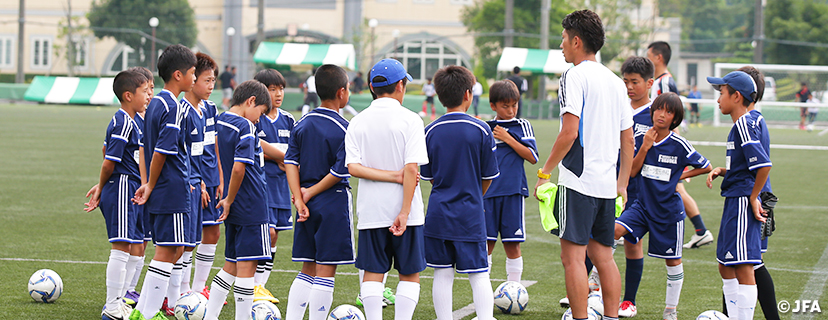
As society continues to evolve, coaches are expected to fulfil an increasingly wide range of responsibilities.
Among these responsibilities, however, the most important is to support players so they can enjoy the game while giving their very best. Enjoyment encourages improvement, helps players overcome challenges, and fosters a lifelong love of football that enriches their lives. To provide this kind of support, coaches themselves must also enjoy the process of coaching.
The most important role of a coach is therefore to create an environment in which all players can enjoy playing football, while continuing to enjoy coaching throughout their lives.
Origin of the Word "Coach"
The word "coach" originates from Kocs, the name of a village in Hungary. The horse-drawn carriages produced in Kocs became renowned throughout Europe for carrying passengers safely and comfortably to their destinations. From around the nineteenth century, the name Kocs came to be used throughout Europe to refer to horse-drawn carriages. Later, the term was adopted as a nickname for private tutors at the University of Oxford in England because they guided students toward their goals. The term eventually developed into the English word "coach," which later came to be used for sports instructors as well.
The origin of the word reminds us that a coach is someone who supports learners and athletes on their journey, helping them achieve their goals safely and effectively. In this sense, coaches should always stand alongside their players, supporting their growth and development. Yelling at players from a position of authority or making unreasonable demands is far removed from the true meaning of coaching.
Role in the Community
Coaches inspire players and children to pursue their dreams while bringing happiness to their local communities. The smiles of players and children bring energy and a sense of well-being to the community.
Every famous player began somewhere, and most started their football journey with a small local club or community team. No one knows which young player may one day represent Japan or become a professional footballer.
For this reason, the role of community coaches is extremely important. We hope that every coach can feel confident in their coaching and take pride in what they do.
Ethics and Professional Conduct
In today's society, ethical behaviour is expected in every field, including sport. It is no longer acceptable to believe that misconduct is permissible simply because no one is watching or because it goes unnoticed. Coaches must also avoid allowing their emotions to dictate their behaviour during training sessions or matches.
There are many different coaching styles. Some coaches motivate players through encouragement; others provide clear, logical instruction on the pitch; some lead by demonstrating excellent technical skills; others bring great passion to their coaching; some possess extensive tactical knowledge and take a highly analytical approach; and others excel at planning and organisation. Whatever their style, every coach needs both passion and sound judgement.
A genuine love of football, a desire to help players improve, and the ambition to help the team succeed are essential qualities for every coach. At the same time, however, when these feelings become too intense, coaches may place excessive demands on players or adopt an approach that lacks sound judgement. Coaches should therefore take time to reflect calmly on their own coaching.
Respect and Fair Play
Let us continue striving toward the vision set out in Japan's Way of "A Fair and Strong Japan." Fair play means remaining fully committed until the final whistle, competing with courage and integrity, respecting opponents, helping injured players, respecting match officials, accepting referees' decisions, and immediately focusing on the next phase of play rather than dwelling on a decision. Coaches are also expected to help players remain calm, encourage them, and keep them focused on the game. Supporters must likewise show respect for opponents and match officials, refrain from abusive language, applaud good play by either team, and express their appreciation to referees. Together, these actions create a positive and enjoyable game for everyone. The essence of fair play is to compete wholeheartedly and to the best of one's ability. Being a fair team is not simply a matter of receiving few yellow or red cards. Rather than simply warning players about what they must not do, we want to praise what they do well and foster a sense of gratitude.
There is still much more to be done to refine Japan's fair and resilient football. Coaches must continually foster in players a sense of care and respect for everyone on the pitch, as well as for all the people and things that support and surround them. When everyone gives their best until the final whistle and strives with dedication to play fair and resilient football, the result is a great game not only for the players but for everyone involved. Great matches are made possible by respected opponents, dedicated referees, everyone involved in organising the game, parents, and supporters.